Monday, November 2, 2015

Wolcottsville woman is all smiles with her new dental implants


Before last week, Jesse Jones-Budziszewski hadn’t looked in the mirror for more than a year. She’d taken to shopping after midnight, when the stores near her Niagara County home were most desolate. She slurred her words.
All of this because the fear and expense of going to the dentist robbed her of most of her teeth.
“I’ve been accused of being drunk and I don’t drink. I don’t attend family functions. I’ve probably missed a good four years of weddings, funerals and every holiday with my family. I’ve become OK with it because I don’t want to make other people uncomfortable,” said Jones-Budziszewski, 36, a married, stay-at-home mother of two from Wolcottsville, near Akron.
She isn’t alone. In a health care climate where dental care can be costly – and many adults are underinsured or uninsured – some patients visit the dentist only as a last resort, when desperate and in pain, because they let their oral health care slide for far too long.
“This is a very common problem in dental offices and our dental clinics,” said Joseph Gambacorta, assistant dean of clinical affairs at the University at Buffalo School of Dental Medicine.
Those who wait so long run the risk of endangering their health, relationships and job prospects – large human costs they must weigh against expenses for preventative and restorative dental care. It’s a conundrum a growing number of Americans will face as baby boomers grow older and go on fixed incomes, and government leaders continue to ignore the climbing cost of dental care as they reshape the health care system, said Andy Jakson, president and CEO of Lif MCO, which manages Lif (pronounced “life”) Dental in Amherst and Evolution Dental Science in Cheektowaga.
“You look like a rock star,” Dr. Ian Walker told Jones-Budziszewski last week as he popped in her new temporary upper denture. She will wear the denture the next two months while Evolution Dental designs and builds implants and permanent upper and lower dentures.
Jakson and his companies are providing her with a free “Smile Makeover” she won in a Lif Dental Facebook contest. But he and other dental professionals across the region say it is possible for those who need dental care to find it. Here’s how – and why it’s so important.
1. The health reasons
“If you’re not taking care of your teeth, it’s going to affect almost all aspects of your quality of life,” Gambacorta said. One of his UB colleagues, Dr. Robert Genco, is among researchers who have connected oral decay to heart disease.
Dr. Larry P. Evola, a general dentist in Lancaster who also handles neuromuscular dentistry cases, said sleep apnea can sometimes be caused by dental conditions. Diabetes has links, too. “As you lose your teeth, you’re also going to jeopardize your ability to eat nutritious foods,” Gambacorta said. “You’re not going to gravitate toward asparagus or that apple. You’re going to gravitate toward something softer and more calorie-ridden.”
2. The mental health fallout
Jones-Budziszewski’s dental woes began when she was 9, after several baby teeth that didn’t fall out had to be removed to make way for her adult teeth. She wore braces for most of the next five years to ward off an underbite. She worked during her 20s mostly in temp jobs that didn’t offer health insurance. Many of her teeth went to waste because she couldn’t afford to fix them. “There was also a genuine fear to go to the dentist from what I went through as a child,” she said, “so when I had a bad tooth, it was cheaper to just go get it pulled.”
Those decisions, and an attempt to make do with poorly fitting dentures, led to all but 11 lower teeth to be removed because of decay. She ditched the dentures and isolated herself from almost everyone but her husband, Bruce, a truck driver, and their children, Shauna, 15, and Jacob, 9. Her mother, Joanne Murray of East Amherst, cried as she described how her daughter missed two of her cousins’ weddings in recent months. “As a mom, it’s been tough on me, too, to see that my baby thinks she has to hide away,” Murray said.
“There’s a lot of other ramifications to creating a new smile than making someone look nice,” Gambacorta said. “There are some inherent benefits in doing it. If people start feeling better about themselves, they’re going to be out there in social situations. They’re not going to be afraid to take an advancement in a job.”
3. Anxiety can be addressed
The dental industry has made great strides when it comes to addressing the fear that comes with visiting the dentist. “Over the last 30 years, things have become more minimally invasive,” said J.J. Siepierski, vice president of Evolution Dental Service, the lab where Jones-Budziszewski’s dentures are taking shape. This means fewer doctor visits, more conservative treatment options and less pain.
A growing number of practices use sedation dentistry that allows anxious patients to sleep through treatments, Gambacorta said. Dentists can prescribe calming medications that patients can take before they arrive – as long as they have a driver – to ease them through a dental visit. There are numbing agents that take most of the discomfort away from novocaine shots. Evola, owner of Forestream Dentistry on Transit Road, said he has become one of the first in the region to use Anutra, a local anesthetic that works faster and less painfully than novocaine.
4. Understand the cost
Dentists have begun to offer a variety of choices to patients based on the “good, better, best” sales model during the last generation as costs have soared and dental insurance reimbursements remained flat, Evola said. “We may talk about a few things that are possibilities for patients but it’s ultimately their decision,” he said. If it’s clear money is a big consideration, he will focus his conversation on the most pressing problems, and may connect the dots for patients who might be suffering from dental-related headaches, neck pain and other issues. “You don’t want to overwhelm patients,” he said. “The tendency for people is to say, ‘Wait a minute, I just came in to get my teeth cleaned.’”
Jones-Budziszewski is getting the “Cadillac” of smile restorations, Lif Dental staff said, while the prize winner’s mother, already a Lif Dental patient, is getting a “Chevy,” or less costly version, in a new permanent denture. Lif Dental also is among offices that provide a free consultation to prospective patients and use Groupon and other discounts to help reduce the cost of preventative visits. Jakson also owns a company called Quick Pay, one of several dental financial firms that allow patients to spread out payments for more expensive procedures at little or no interest.
Those seeking more affordability can look to Erie Community College for free routine care or to the UB dental school for lower cost comprehensive care in all dental specialties, including smile restorations. Because UB has teaching clinics, handled by students overseen by dozens of the top dentists in the region, the cost generally is about half that of standard care, Gambacorta said. Those with limited means can stretch their dollars even further by applying for Medicaid, which is accepted by the UB Clinic, several neighborhood health centers in Buffalo and a small number of private dentists in the region. UB and the Good Neighbors Free Clinic in the city are among those with Medicaid specialists on staff who can guide patients through what Jones-Budziszewski and others described as a maze of rigorous and confusing paperwork.
The UB clinic handled 150,000 patient visits last year and is open to people of all financial means; Good Neighbors provides free basic dental care twice a week from 18 of the region’s top dentists who volunteer to see lower-income patients on a first-come, first-served basis. Appointments will take more time, but bring with them substantial savings. “Our typical patient hasn’t seen a dentist in two years,” said Todd Koch, executive director with Good Neighbors. “We have people come in who’ve never been to the dentist as adults. They never had insurance, so they never went.”
5. You are responsible
The way to get better dentistry is to research the office or clinic you’re considering. Make sure they can reasonably handle your concerns. If you have a fear of going to the dentist, find out what a clinic can do to help put you at ease. And ask about affordability. Because a significant investment in time, money and emotional energy comes with required dental work, Jakson and Gambacorta said it’s also always a good idea to get a second opinion – especially if you feel pressured or overwhelmed by the amount of dental work recommended.
Jones-Budziszewski knows she is particularly fortunate at this point. It comes after a decade of anguish.
“All right! I can eat,” she said as she looked in the mirror at her new temporary top dentures last week.
She said she chose to go through the entire process, allowed “before” photos to be taken, and shared her story not only for herself.
“I don’t want people to go through what I’ve gone through,” she said. “I want them to know there is a solution.”
Source: http://www.buffalonews.com/life-arts/wolcottsville-woman-is-all-smiles-with-her-new-dental-implants-20151031
In other dental news: Aurident offers the Optimet DS 6000 Scanner which uses patented proprietary conoscopic holographic technology to generate highly accurate and consistent scans.

The DS 6000 Scanner can be used for all dental applications such as copings, full contour crowns, bridges up to 14 units, implants, implant bars and dentures.

Holladay Dental Office Earns Prestigious Management Certification

 A Holladay dental staff recently completed a special training program focused on team building and better management practices.
Kolbe Concept training is designed to help businesses better communicate and maximize employee potential. The training program focuses on employees' natural strengths and how those skills can improve the production of the team.
"A strong team includes the right mix of instinctive talents in the right roles. Kolbe identifies this formula for success with an extraordinary level of accuracy and detail," said Dr. Andrew Ericksen, who operates Holladay Dental Studio.
The Holladay dental office completed the training on Sept. 21. Each staff member took the test and was given a rating based on their strengths. Once the Holladay Dental Studio team established its strengths, the Kolbe training helped employees discover how to better communicate as a team.
The Kolbe Concept has been used by successful businesses across the world and has been cited in scientific studies and scholarly articles. The Kolbe creative process works in five stages: motivation, instincts, will, reason and conation. Conation allows workers to guide their creative instincts and become better team members.
Dr. Ericksen said since earning the certification, he has found strengths in staff members that would have otherwise gone unnoticed, which is a true benefit to his patients.
"Kolbe benefits patients because it not only helps our team communicate better with each other, but also with our patients," Dr. Ericksen said. "By asking just a few questions, we can better relay information to our patients and get better treatment results."
Holladay Dental Studio, 2160 E. 4500 S., Ste. 3, is a comprehensive dental practice located in a newly remodeled office with four operatories. The practice handles general dentistry, cosmetic dentistry, restorative dentistry, orthodontics and dental implant cases. The practice uses dental implants to replace individual missing teeth or to stabilize patients' dentures. Holladay Dental Studio also treats patients with Invisalign, a special orthodontic method that uses clear aligners to straighten teeth instead of uncomfortable brackets and wires. Invisalign aligners are removable and virtually invisible.
Dr. Ericksen is a Holladay native who attended Olympus High School and later graduated from the University of Utah with an undergraduate degree in international studies. He earned his Doctor of Dental Surgery degree from Creighton University in 2011 and took over at Holladay Dental Studio in 2012. Before acquiring Holladay Dental Studio, Dr. Ericksen worked at Premier Dental Care in West Valley City.
Dr. Ericksen also completed a dental implant residency at the Whitecap Institute, and he is a member of the American Dental Association, Academy of General Dentistry and the American Academy of Implant Dentistry.
Source: http://www.marketwatch.com/story/holladay-dental-office-earns-prestigious-management-certification-2015-10-31
In other dental news: Aurident's 3D dental scanners offer superior quality for both model and impression scanning. The Optimet DS 6000 Scanner uses patented proprietary conoscopic holographic technology to generate highly accurate and consistent scans. The DSi 6000 Impression & Model Scanner overcomes the limitation of other scanners by accurately scanning impressions and models where other scanners have difficulty.

HIV/AIDS patients find needed dental help at Howard Dental


Five years after being diagnosed with HIV, Matthew Bratrsovsky knows what it is like to be stigmatized by those who fear, or look down on, people who have the virus that causes AIDS.
Once, when he had pancreatitis, an ambulance driver who was taking him to a hospital greeted him by saying, "Oh, you're the guy with AIDS."
But Bratrsovsky, 34, wants people to know this: "You are a person, you are not the guy with AIDS."
Bratrsovsky is thankful he can let his guard down at Howard Dental Center, a nonprofit that offers dental services to HIV-positive and AIDS patients.
"I feel like a friend when I come here. You don't feel afraid," he said after an examination by dentist Alfonso Salazar-Celi.
The organization, a Colorado Health Network program that has been in operation since 1994, treated 747 patients — and took 3,700 visits — in fiscal year 2014.
Howard provides a full range of dental services to HIV patients who can't afford private treatment. Their disease and treatment can leave them highly vulnerable to dental problems.
Some have been turned away by dentists who fear treating those with HIV/AIDS. "They believe they are going to be infected," said Salazar-Celi.
Drugs used to treat the infection can cause dry mouth, a condition that leads to gum problems and cavities. Jayson Richardson, 36, who lost 14 teeth to gum disease, came to Howard to be fitted for partial dentures.
Richardson is among the patients who require frequent visits to the dental hygienist for preventive care. "The teeth he still has, we try to keep in good shape," Salazar-Celi said.
When the work can't be done at the center, patients are sent to specialists.
Good oral health fosters a stronger immune system, which is vital for those with HIV/AIDS.
If tooth decay and other bacterial infections that begin in the mouth aren't treated, they can spread into the bloodstream and damage the heart and other organs. People with HIV/AIDS may have compromised immune systems that leave them vulnerable to opportunistic infections.
Patients who lose teeth at an early age also face problems getting nutrients needed to support a healthy weight, said Lili Carrillo, director of oral health care services at Howard.
"It is also an issue of self-esteem," she said.
Howard has a partnership with the University of Colorado, which provides fourth-year dental students to work at the clinic.
The Community College of Denver provides the center with dental hygiene students, who do preventive care, as well as the one full-time hygienist on staff.
"Their students rotate through our office," Carrillo said, "and we help train the dentists of tomorrow."
Source: http://www.denverpost.com/news/ci_29049355/hiv-aids-patients-find-needed-dental-help-at
In other dental news: Aurident offers the Optimet DS 6000 Scanner which uses patented proprietary conoscopic holographic technology to generate highly accurate and consistent scans.

The DS 6000 Scanner can be used for all dental applications such as copings, full contour crowns, bridges up to 14 units, implants, implant bars and dentures.

Preventing dental implant infections


One million dental implants are inserted every year in Germany, and often they need to be replaced due to issues such as tissue infections caused by bacteria. In the future, these infections will be prevented thanks to a new plasma implant coating that kills pathogens using silver ions.
Bacterial infection of a  is a dreaded complication, as it carries with it a high risk of jawbone degeneration. Implanting an artificial dental root sets off a race between infectious pathogens and the body's own cellular defenses. If the bacteria win, they form a biological film over the titanium to protect themselves from anti-biotics. Once the implant is colonized by germs, the result is an inflammatory reaction, which can result in bone atrophy.
To lower the risk of infection and improve the long-term effectiveness of the implant, researchers at the Fraunhofer Institute for Manufacturing Technology and Advanced Materials IFAM in Bremen have developed a new type of implant  in cooperation with industry partners. The DentaPlas coating helps prevent the growth of bacteria, thus allowing the implant to properly take hold and thereby form a faster and more permanent bond with the jawbone. The trick to this lies in combining surface materials that feature physical as well as chemical properties. "We have given the DentaPlas coating a rough texture, which promotes cellular growth, in addition to combining it with a hydrophilic plasma polymer coating, which attracts moisture," says Dr. Ingo Grunwald, project manager at the IFAM. Researchers have integrated silver nanoparticles into the thin plasma polymer coating, which is up to just 100 nanometers thick. The silver nanoparticles dissolve over a period of several weeks, and during that time they continuously release small quantities of anti-microbial silver ions, which kill bacteria.
Three layers of protection
"The DentaPlas system consists of three layers, with two plasma polymer layers surrounding a center layer of silver. Within this structure a biocide reservoir is formed, and the outermost layer releases the ions. This is beneficial because it prevents direct contact between the tissue and the silver particles, which can be toxic when exposed," says developer Dr. Dirk Salz. Researchers can tailor the silver concentration as well as the thickness of the layers and their porosity. This allows the silver ions to penetrate the outermost plasma polymer layer over a set period of time deemed necessary to properly integrate the implant. When the silver reservoir is exhausted, no more  are released, thus avoiding any long-term toxic effects.
In trials using finished implants and titanium test samples, the IFAM researchers demonstrated that the DentaPlas coating is not only anti-microbial but also fully biocompatible and sterilizable. The test samples were coated using a plasma polymerization facility at the IFAM in Bremen. Researchers confirmed the mechanical stability and robustness of the DentaPlas coating in trials using the lower jawbones of pigs taken from butcher shops. Here, they subjected the DentaPlas coated implants to the rigors of being screwed into place using the instruments found in modern dental practices. The DentaPlas coating passed this stress test with flying colors. Project partner and Fraunhofer spinoff Bio Gate AG successfully transferred the processes of coating the  and titanium screws to its own production facilities. The medical tech-nology company is also the manufacturer of the DentaPlas three-layer coating system.
Source: http://phys.org/news/2015-11-dental-implant-infections.html
In other fashion news: Aurident's 3D dental scanners offer superior quality for both model and impression scanning. The Optimet DS 6000 Scanner uses patented proprietary conoscopic holographic technology to generate highly accurate and consistent scans. The DSi 6000 Impression & Model Scanner overcomes the limitation of other scanners by accurately scanning impressions and models where other scanners have difficulty.

Aspen Dental Practice Opening In Russellville Increases Access To Care In Arkansas

A new Aspen Dental is opening in Russellville, Arkansas on Thursday, November 5.
Located at 331 Weir Road, the conveniently-located practice will provide dental services  that range from dentures and preventive care to general dentistry and restoration.      
Dr. Rosetta Shelby-Calvin, lead dentist at the Russellville office, received her Doctor of Dental Medicine (DMD) degree at the University of Louisville. Dr. Shelby-Calvin looks forward to meeting the Russellville community and providing much-needed access to dental care and education.
The Russellville office, located in Pope County, is one of five Aspen Dental-branded locations in Arkansas, a state where 64 of 75 counties, including Pope, have dental health professional shortage areas as designated by the U.S. Department of Health and Human Services.
According to a study conducted in 2013 by Syracuse University's Whitman School of Management, each new Aspen Dental-branded office supports local community growth by contributing more than $1.3 million in positive economic impact through job creation and capital investment. The local community benefits through investment in office construction, furniture and fixtures, jobs created and wages and benefits paid, taxes, and investment in marketing and advertising.
Aspen Dental practices offer patient-friendly programs and services that help thousands of people every day get the dental care they need, including:
  • Personalized treatment and friendly service. Quick-fix solutions don't solve larger or chronic oral health problems. At Aspen Dental, each patient receives a comprehensive diagnosis and treatment plan designed by the dentist with long-term oral and overall health in mind. Available services include hygiene, treatment of periodontal (gum) disease, extractions, fillings, oral surgery, whitening, and crown and bridge work. And since no one likes an unexpected bill, the practice offers benefits like a price guarantee and insurance estimate guarantee as part of its Peace of Mind Promise.
  • Affordable care. Cost shouldn't prevent patients from getting the dental care they deserve. That's why Aspen Dental-branded practices are committed to keeping prices low, as well as offering special promotions, senior discounts, and free new-patient exams and X-rays for patients without dental insurance. The practice works with all insurance providers and handles the paperwork, saving patients time and hassle.
  • On-site denture labs and a Money-Back Guarantee for denture patients. Every Aspen Dental is equipped with an on-site denture laboratory, which helps facilitate quick turnaround for denture repairs, relines or adjustments. Patients choose Aspen Dental for the seven styles of full and partial dentures and have the comfort of knowing that the supportive dentists and staff will go above and beyond to ensure proper fit and comfort of their custom-crafted dentures. Getting used to dentures takes some time, but if patients are dissatisfied with their dentures for any reason – the practice will refund the cost of the dentures when patients return them within 90 days.
  • Convenient hours and location. The office will be open extended hours, including evenings and select Saturdays, so that patients can see the dentist at a time that works best for their schedule. Walk-in and emergency patients are welcome.
To make an appointment, patients can call (850) 238-3326 or 800-ASPEN DENTAL (800-277-3633), or visit www.aspendental.com.
About Aspen Dental Practices
Dentists and staff at Aspen Dental practices believe everyone has the right to quality, affordable oral health care. As one of the largest and fastest-growing networks of independent dental care providers in the U.S., local Aspen Dental practices – more than 500 of them across 33 states – offer patients a safe, welcoming and judgment-free environment to address their dental challenges. Every Aspen Dental-branded practice offers a full range of dental and denture services – including comprehensive exams, cleanings, extractions, fillings, periodontal treatment, whitening, oral surgery, crown and bridge work – allowing patients to have the peace of mind that they are taken care of and protected, so they can focus on getting the healthy mouth they deserve. In 2014, Aspen Dental-branded practices recorded more than 3.4 million patient visits and welcomed nearly 750,000 new patients.
About Aspen Dental Management Inc. 
Aspen Dental Management Inc. (ADMI) is a dental support organization that provides non-clinical business support services to independently owned and operated dental practices in 33 states. This can include services and recommendations related to finding the right location, leasing, equipment, accounting and marketing. This model leaves independent, licensed practitioners free to concentrate on patient care.
To learn more about Aspen Dental practices and services, preview the Aspen Dental patient experience, get answers to general treatment questions, find a location, and schedule appointments, visit www.aspendental.com.  To learn more about careers at ADMI and Aspen Dental practices, visit http://aspendentaljobs.com.
SOURCE: http://www.prnewswire.com/news-releases/aspen-dental-practice-opening-in-russellville-increases-access-to-care-in-arkansas-300169886.html
In other fashion news: Aurident offers the Optimet DS 6000 Scanner which uses patented proprietary conoscopic holographic technology to generate highly accurate and consistent scans.

The DS 6000 Scanner can be used for all dental applications such as copings, full contour crowns, bridges up to 14 units, implants, implant bars and dentures.

Halloween brings dental woes – and many have no way to pay for crucial care


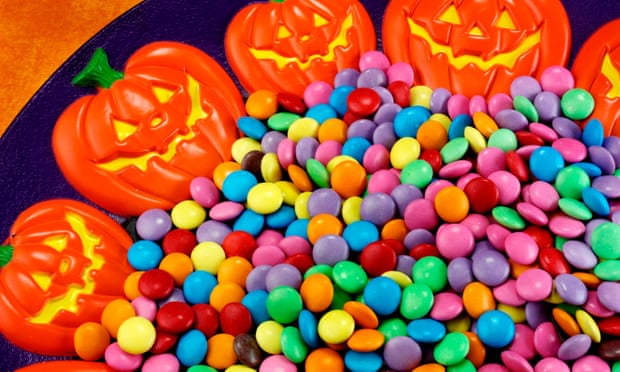
It’s the day after Halloween. Do you know where your toothbrush is?
Hopefully, after all that candy, a brush is all you need. For many, however, the situation will be worse. Last year, emergency dentist visits on Halloween were 80% higher relative to an average October day, according to a survey by Sikka Software, a software company used by more than 13,000 dentist offices across the country.
But for many, even an emergency visit is out of the question. A third of the US population, by some calculations, doesn’t visit a dentist simply because they can’t afford to pay, and untreated tooth decay remains the most common chronic illness affecting schoolchildren. It’s hard to overestimate the value of that toothbrush. Especially in light of this weekend’s candy influx.
The Affordable Care Act, AKA Obamacare, opened up discussion over access to healthcare in the United States, but dental care was largely left out of the debate, even though untreated dental problems not only cause pain and, ultimately, tooth loss, but have broader medical consequences. Untreated periodontal disease can send bacteria into the bloodstream with scary results: studies show individuals with periodontal disease are 2.7 times more likely to suffer a heart attack and three times more likely to have a stroke.
In one particularly horrifying case, a 12-year old boy, Deamonte Driver, died when bacteria from an abscessed tooth spread to his brain. The boy’s mother – all of whose children were plagued by dental woes, and who relied on Medicaid – couldn’t afford the cost of an $80 extraction.
Obamacare has managed to cut the rate at which Americans are without health insurance to less than 10% – and increased access to basic healthcare in the process. True, expanding Medicaid’s “benchmark benefits” for new recipients means that millions of children will at least be eligible for dental care for the first time, if they can find a provider willing to accept the low reimbursement rates that Medicaid allows.

Even if you do have insurance, some of the most generous plans around cap annual benefits at around $2,500 a year. Someone with even mild to moderate dental problems – a few root canals, one crown, and a handful of fillings – could chew through their benefits midway through the year, and already be several thousand dollars out of pocket, thanks to co-pays. That’s why it’s entirely possible to find people with jobs – and even with dental insurance – who still can’t afford healthy teeth, if they’re playing catch-up.But about 40% of Americans don’t have any dental insurance at all, and about 40% of all dental spending comes from patients’ pockets. If you do have dental insurance, the National Association of Dental Plans says there’s a 99% chance it is provided by your employer. And its benefits are going to be skewed heavily in favor of those with good dental health already: a typical plan tends to fully reimburse individuals for routine cleanings, and cover 80% of the cost of fillings. More complicated procedures, such as root canals or crowns, which can cost thousands of dollars apiece and which are more common among people suffering from dental problems, are only covered at a rate of 50%.
Adding to this mess is the fact that, like healthcare, the world of dental care is plagued by a lack of transparency when it comes to pricing. One 2013 survey of dental care affordability and accessibility found that in the Los Angeles area, prices for some common procedures varied by an average of 384%, and that 25% of dentists wouldn’t disclose prices to prospective patients over the phone before the latter scheduled an appointment. Nor did the survey find any link between the price that a patient pays and the treatment’s outcome.
The icing on this unpalatable cake? It’s a kind of toxic spiral. The more dental problems someone has, the worse their teeth look. That, in turn, affects their ability to earn a living. With a bright smile – featuring white, even teeth – viewed as a key trait for all job applicants, anyone with broken or missing teeth or visibly in need of dental care is at a disadvantage, and shunted off into less well-paying non-customer service jobs, in the same way that overweight women find themselves relegated to behind-the-scenes and less well-paid positions.

As it turned out, the president was only able to push through a partial version of healthcare reform, one that excluded dental care for all American adults, even those on Medicaid. Gladwell’s article, however, reminds us that successful preventive programs, in dental health just as much as in healthcare, end up saving the system money in the long run. Had there been some way to finance an $80 extraction, it wouldn’t just have saved Deamonte Driver’s life, but also the $250,000 cost of the last-minute attempts to save him, including two operations and six weeks in the hospital.Bad teeth, wrote Malcolm Gladwell inan article for The New Yorker, have become “an outward marker of caste”. In a piece written before the passage of Obamacare, Gladwell cites a passage from a book by two Harvard University researchers, Uninsured in America. What, its authors questioned interviewees, would be the first thing they did if President Obama succeeded in establishing universal healthcare coverage? Their priority, the answers came, was their teeth.
It’s long past time for someone to attempt for dental care what Obamacare has done for medical care, given the scope of the problem – thousands of people routinely show up at open clinics organized by dental charities, and that’s just the tip of the iceberg. The fact that private equity firms now view dental care as a big and profitable business, and are hunting for dentists who want to sell their practices, serves as another red flag: with dentistry being less regulated than medicine, they see opportunities to drive profit margins even higher. That could spell more bad news down the road for those in need of dental treatment, if it ends up reducing the already too-few number of dentists, especially those working in high-demand areas or willing to take on Medicaid patients or those with intractable problems.
Democratic presidential candidate Bernie Sanders has discussed some of these issues, but even his report on what he calls a “dental crisis” doesn’t mention many problems. For instance, while someone without access to a physician can reasonably expect – as a last-ditch solution – to get help at a hospital emergency room, in the vast majority of cases, all most ERs are able to do for dental patients is hand out antibiotics and painkillers. They don’t have dentists on call or dental facilities to treat patients who need, say, an emergency root canal.
Volunteer efforts to address the crisis are great – free clinics, discounted care provided by dental schools, individual dentists who are willing to treat individual patients pro bono or by greatly discounting their rates. But as one critic has pointed out, these efforts don’t always match where the need is greatest, andcan’t be counted on to provide ongoing care.
Hence, the toothbrush. Which, of course, stands for preventive care in general. According to one survey, 17% of those with dental insurance say they haven’t made a single visit to a dentist in the last year; 19% of those with dental insurance have never used it to obtain preventive care. If the first time you visit a dentist is when you’re already experiencing pain, then there’s a problem. And yet even those with insurance reported having one major unmet dental need.
We can push for well-trained mid-level dental providers – akin to physicians’ assistants – to perform more routine procedures, like the kind of extraction that would have saved Deamonte Driver’s life. The American Dental Association opposes this, despite what is widely acknowledged to be a problem with access to this kind of basic dental service nationwide – and the fact that preventive care of this kind is precisely what is most needed.
And we can all realize that dental care and healthcare are inextricably linked. Gobbling up all that Halloween candy isn’t just going to add some unwanted pounds to your frame – making your doctor scowl at your next checkup – but it’s going to boost the risk that you’ll end up on the road to dental problems. That will make it more likely that next Halloween’s chills won’t come from that scary late-night horror flick on Netflix, but from learning the dentist’s estimated cost of providing the services you need to hang on to your teeth.
Source: http://www.theguardian.com/us-news/us-money-blog/2015/nov/01/dental-care-insurance-halloween
In other dental news: Aurident offers the Optimet DS 6000 Scanner which uses patented proprietary conoscopic holographic technology to generate highly accurate and consistent scans.

The DS 6000 Scanner can be used for all dental applications such as copings, full contour crowns, bridges up to 14 units, implants, implant bars and dentures.

HCC's dental center offers affordable care through student learning


Preventive dental care can cost anywhere from $60 to $200 and, according to the Kaiser Family Foundation, is why more than a third of Americans skip it. But at Howard Community College's Dental Hygiene Center, which opened its doors to the community this fall, patients receive these services for a flat fee of $20 per visit.
"The students are learning so we can't make profits, said Susan Seibel, director of the college's Dental Hygiene Program. "So we only charge enough to cover materials."
The Dental Hygiene Center offers students in Howard Community College's two-year dental hygiene program the opportunity to work with patients before graduating. In return, patients with and without dental insurance pay the same affordable price to get their teeth cleaned and examined by the students and double-checked by licensed hygienists who serve as instructors in the program.
"In dentistry, there aren't a whole lot of [affordable] clinics that people can go to," Seibel said. "We've had patients [at the center] who've never been to the dentist, or it's been 10 years or 15 years. We've had a couple of patients with suspicious lesions, who have gone undiagnosed."
65 percent of uninsured Americans reported skipping dental care over the course of a year because of cost, according to a survey administered by the Kaiser Family Foundation in 2013.
While dental hygienists are not able to treat cavities or oral disease, they examine patients for signs of these issues. At Howard College's dental center, students not only clean patients' teeth and teach them proper hygiene practices — they also perform oral cancer screenings and take radiographs, or x-rays, of a patient's teeth.
"This machine here takes the whole panoramic radiograph, which in a dentist office costs maybe $200," Seibel said while pointing to brand new equipment. "But that's part of the $20 here."
If students or instructors find cavities or other serious issues in a patient's teeth or gums, the center's supervising dentist writes a referral for the patient to take back to his or her family dentist.
"A lot of patients don't have insurance or and even a regular dental office that they go to, so we're hoping to get a referral network set up so we can say, 'Go to this dentist, he will see you'," Seibel said. In the meantime, the center often sends patients without insurance to Chase-Brexton Health Services in Columbia, which provides affordable healthcare.
Since the Dental Hygiene Center opened to the public earlier this fall, Seibel said that the training program's 12 second-year students have served approximately 120 patients. In the spring, when the center opened its doors to the college's students and faculty, students saw 150 patients.
"This is my 19th patient this semester," said second-year student Brittany Fiore, who had just examined and cleaned her boyfriend's mother's teeth. "This time last [semester] I was seeing my seventh patient. I'm amazed at how fast I'm getting."
"They feel nice and clean," said Fiore's patient, Kathy Hartman, who drove from Anne Arundel for the visit. "She did a good job."
"Appointments take about three hours right now, but in the spring they will probably take about two hours," Seibel said, because students get quicker at examining patients.
Before students in the program begin working in the dental hygiene center, they learn how to clean and examine teeth by practicing on dummy heads.
"[The dummy is] hooked up to air, water, suction and all that and he has teeth," Seibel said. "We have a demonstrator model at the front and we have a screen that comes down so the instructor can show the students, and they can watch on the screen and they can practice."
Second-year student Kylie Ordovensky demonstrated how she practiced dental checkups on a dummy during her first year.
"Sometimes the calculus, or tartar — you can see it on the teeth — but sometimes it goes under the gum," Ordovensky said while probing the dummy's mouth. "When we explore, we search for the calculus and that it makes it easier to remove when we get the [tartar removal instrument] out. It's important to remove because it can cause gum disease and damage bone structure, which is needed to keep all them teeth in your mouth."
Once a student proves certain competencies on the dummy during his or her first semester, he or she then practices on student partners.
"Then they get competent real quick," Seibel said, "because you have someone that says 'ow' or 'stop' or whatever."
During the second semester, students start seeing their family and friends as patient volunteers and in their second year, they see patients from the community.
Graduates of the dental hygiene program, which began accepting students in the fall of 2014, receive an associate of applied science degree in dental hygiene. Afterwards they must obtain a license to practice dental hygiene professionally.
Dental hygienists earned an annual median income of $70,210 in 2012, the most recent year for which this figure is available from the Bureau of Labor Statistics.
Seibel said that there were more than 50 applications to the program this fall, out of which 15 students were accepted. Tuition to the program, which is one of five such programs in Maryland but the only program in Howard County, costs $132 per credit plus fees and requires completion of 43 credits, in addition to prerequisite courses.
"It's been great," said Aran Song, a second-year student who graduated from Marriotts Ridge High School. "It's all new facilities, and I can bring my family and friends to get comfortable in the clinic. And I like my instructors — they're so nice."
The college's dental clinic is currently open from Monday to Wednesday, with six students working in the morning and six working in the afternoon. In the spring, Seibel said, the clinic will be open five days a week in order to accommodate the first-year students who start working with patient volunteers.
To make an appointment or to find more information about the services offered by Howard Community College Dental Hygiene Center, go to howardcc.edu/dentalcenter.
Source: http://www.baltimoresun.com/news/maryland/howard/columbia/ph-ho-cf-hcc-dental-center-1105-20151101-story.html
In other dental news: Aurident's 3D dental scanners offer superior quality for both model and impression scanning. The Optimet DS 6000 Scanner uses patented proprietary conoscopic holographic technology to generate highly accurate and consistent scans. The DSi 6000 Impression & Model Scanner overcomes the limitation of other scanners by accurately scanning impressions and models where other scanners have difficulty.