Wednesday, September 30, 2015

Scottsdale dentist seeking dental-implant patients for workshop

You are encouraged to leave relevant comments but engaging in personal attacks, threats, online bullying or commercial spam will not be allowed. All comments should remain within the bounds of fair play and civility. (You can disagree with others courteously, without being disagreeable.) Feel free to express yourself but keep an open mind toward finding value in what others say. To report abuse or spam, click the X in the upper right corner of the comment box.

Source: http://www.scottsdaleindependent.com/business/scottsdale-dentist-seeking-dental-implant-patients-for-workshop/

In other dental news: Aurident's 3D dental scanners offer superior quality for both model and impression scanning. The Optimet DS 6000 Scanner uses patented proprietary conoscopic holographic technology to generate highly accurate and consistent scans. The DSi 6000 Impression & Model Scanner overcomes the limitation of other scanners by accurately scanning impressions and models where other scanners have difficulty.

Tillery Family Dental


For more than 35 years, Tillery Family Dental has been providing a full array of general, orthodontic,  cosmetic, and sedation dentistry services to the Indianapolis West side.
Ongoing Community Involvement
Dr. Michael Tillery and Dr. Kelly Elikofer are Indianapolis natives and are strongly rooted in the community. They are proud to give back to the area and patients, and look forward to serving the Indianapolis residents for many years to come.
Each year, the Tillery Family Dental staff participates in a charity event of their choosing. In recent years, they have provided their services and donations to organizations dedicated to helping the following causes:
–          Dentistry from the Heart
–          Perfect Smile for the Holidays
–          Toys for Tots – Indianapolis
–          Special Olympics
–          Wounded Warrior Project
A Commitment to Continuing Education
At Tillery Family Dental, we are committed to delivering highly personalized, exceptional care that addresses all of your oral health needs. In order to achieve this unparalleled level of service, Dr. Tillery, Dr. Elikofer and our entire team have undergone extensive training in the field of sedation dentistry, cosmetic dentistry, Invisalign, and customer service.
Both Dr. Tillery and Dr. Elikofer began their dental education at the Indiana University School of Dentistry.
Since entering practice, Dr. Tillery and Dr. Elikofer have engaged in a rigorous schedule of continuing education courses in order to remain up-to-date on all of the latest advances in the field. Dr Tillery personally participates in over 50 days of continuing education per year, which added to his qualifications to become a Fellow in the Academy of General Dentistry in 1996. Dr Tillery is a  Preferred Invisalign Provider in the state of Indiana, and our team has completed over 100 hours of training in this field.  Dr Tillery received training in the Dental Oral Conscious Sedation Group over 15 years ago, and has been providing sedation for patients wanting to do major dental work in as few visits as possible, as well as patients having a high fear of dental work in an anxiety-free environment. Attending hundreds of hours of related and update courses over this period, Dr Tillery is also licensed in IV Sedation.
Source: http://fox59.com/2015/09/30/tillery-family-dental/
In other dental news: Aurident offers the Optimet DS 6000 Scanner which uses patented proprietary conoscopic holographic technology to generate highly accurate and consistent scans.

The DS 6000 Scanner can be used for all dental applications such as copings, full contour crowns, bridges up to 14 units, implants, implant bars and dentures.

Free dental care to be given at huge clinic at Fresno Convention Center


Cory Costanzo expects patients to be lined up outside the Fresno Convention Center before dentists from all over California arrive on Friday morning to open a two-day free dental clinic.
Volunteer dentists, dental hygienists and dental assistants will try to see 2,000 patients at the clinic on Oct. 2 and Oct. 3.
Costanzo, a Fresno orthodontist, won’t be surprised if some people have to be turned away at the end of the two days. Long lines for free dental care have been the pattern at six previous CDA Cares clinics held by the California Dental Association in the past three years, he said.
“The goal of CDA Cares is to address the large number of patients, for whatever reason, who don’t have access to dental care,” said Costanzo, who is in charge of the Fresno event.
Both adults and children will be treated at the clinic, but Costanzo said adults have predominately taken advantage of prior clinics that have been held in Modesto, San Diego, Vallejo, San Jose, Sacramento and Pomona.
Many of the adults have insurance but can’t find a dentist, he said. The central San Joaquin Valley has some of the highest rates of people on Denti-Cal, the dental insurance for people on Medi-Cal, the state-federal program for low-income residents, but many dentists don’t accept the insurance because reimbursement rates are so low, Costanzo said.
“The CDA has done some studies that showed up to 30% of Californians did not have access to dental care for one reason or another,” he said.
Patients with Denti-Cal also find there are limited benefits for adults, said Dr. Stanley Surabian, chief of dental services for Community Medical Centers and program director for the general practice residency program in dentistry in Fresno. For example, Denti-Cal pays only for complete sets of upper and lower denture plates, but not partial dentures, Surabian said.
The free clinic will offer partial dentures or “stay plates,” Costanzo said, and it will be able to provide complete dentures for people who have been missing their teeth for six months or longer. A limited number of root canals on front teeth also will be done. The dentists will provide fillings, extractions and cleanings.

Surabian said patients who have private dental insurance sometimes are unable to afford services. “Money is tight. People just don’t have it,” he said. “And there are a lot of bad plans where you get very little coverage anyway, and they find out when they’re ready to use it, unfortunately.”
Surabian said he and residents in the dentistry program will be participating in the CDA Care clinic. Community Regional Medical Center donated $10,000 to the CDA event.
Sister Mary Clennon, director of the Saint Agnes Holy Cross Center for Women and the Holy Cross Clinic at Poverello, expects dentists at the CDA Cares clinic will see patients similar to those who turn to Holy Cross for help.
The Holy Cross Clinic, which relies on volunteer dentists, provides services to everyone, regardless of their ability to pay or insurance status. Some are undocumented immigrants and low-income individuals who do not have dental insurance, but others have dental insurance and can’t afford the co-payments for expensive procedures.
“People think we serve just the homeless and it’s not true,” she said. The Holy Cross Clinic provides dental services to about 300 people on average a month.
Clennon said the Holy Cross dental director will participate in the CDA Cares two-day clinic. Saint Agnes Medical Center contributed $20,000 to the clinic through its Community Benefit and Outreach program.
Shane Guthrey, 46, of Fresno, had no dental insurance in 2013 and turned to the Holy Cross clinic for help when pain became so severe he couldn’t sleep. He already had lost several teeth, and dentists at the clinic said he needed a complete set of dentures.
“I’ll forever be in debt and in appreciation of what happened in that clinic,” he said. Guthrey, who smiled to show off his teeth, now works as a maintenance man for Poverello House and now has dental insurance.
Holy Cross, Community and other health centers that provide dental services free or at low cost in the Valley will have patients referred from the CDA Cares clinic at the Convention Center, Costanzo said. Some will need more help than dentists at the two-day clinic can provide, he said. “A goal is to take care of their most urgent needs at this event but steer them toward these local clinics where they can continue their care.”
Source :http://www.fresnobee.com/news/local/article36875760.html
In other dental news: Aurident's  3D dental scanners offer superior quality for both model and impression scanning. The Optimet DS 6000 Scanner uses patented proprietary conoscopic holographic technology to generate highly accurate and consistent scans. The DSi 6000 Impression & Model Scanner overcomes the limitation of other scanners by accurately scanning impressions and models where other scanners have difficulty.


Read more here: http://www.fresnobee.com/news/local/article36875760.html#storylink=cpy

Monday, September 28, 2015

Improving oral hygiene


Key points:

  • Pharmacists are well-placed to identify customers at risk of poor oral health, and should take every opportunity to educate those most at risk of oral health problems;
  • Customers should be reminded that practising simple health habits could prevent many oral health problems;
  • Rising dental decay rates in young children is related to changes in what, and how, some children eat; and
  • Pharmacists should take a more active role in identifying where medicines have significant potential to cause dental caries.
FOR COMMUNITY PHARMACY, at-risk patients may include those who are affected by certain medical conditions or use certain drugs that are linked with oral health problems.
Children may also be affected; despite it being preventable, research shows decay is prevalent in about 50% of children in Australia younger that six years of age.
“In Australia decay rates are higher now than they were a decade or two ago—we need to be a bit more than just embarrassed about that and start doing something about it,” says Dr Peter Alldritt, chairman of the Australian Dental Association’s Oral Health Committee.
“The easiest way to avoid tooth decay is to be aware of what you eat and drink and maintain healthy oral hygiene habits,” he says.
Dr Alldritt says there are plenty of opportunities for pharmacists to broach the topic of oral healthcare with their customers.
“And it’s most important that pharmacists take these opportunities to educate those most at risk of oral health problems,” he says.
Take, for example, people with diabetes. “Pharmacists know which of their customers have diabetes because they are coming in for their medication,” he says.
“There are very strong links between diabetes and poor oral health—a diabetic is more likely to have periodontal disease than a non-diabetic and poorly controlled diabetes aggravates the problem of gum disease as well.
“Likewise having poor oral health makes an individual’s diabetic status worse so encouraging people with diabetes to have good oral health and get to the dentist and have proper cleaning done is actually going to improve their diabetic health as well,” says Dr Alldritt.

Starting early

Dr Alldritt says practising simple health habits could prevent many oral health problems, yet many people still needed reminding of the basics such as:
  • brush teeth twice a day;
  • floss teeth daily;
  • eat a healthy balanced diet; and
  • visit the dentist for regular checks.
The Australian Dental Association says good oral hygiene practices need to start as soon as a child is born. Dr Alldritt says key messages for parents of babies and toddlers that pharmacists can reinforce include:
  • gently wipe babies’ gums with a moistened soft cloth once a day;
  • once a baby’s primary teeth start to appear use a toothbrush designed for babies to gently massage their teeth and gums;
  • up to the age of 18 months a baby’s teeth should be brushed with plain water once a day after the last feed in the evening;
  • low-fluoride toothpastes developed for children can be introduced from the age of 18 months;
  • encourage the child to spit out the excess toothpaste;
  • adult toothpastes which have a higher concentration of fluoride can be introduced from the age of six;
  • children should begin to learn how to brush their own teeth from around the age of four but will still need an adult’s guidance until about the age of eight when they have developed the skills to properly clean their teeth;flossing should be introduced the children when they are about two and a half years old;
  • the recommendation for a child’s first dental visit is one year of age; and
  • The dentist will advise how often the child should visit based on their risk factors for decay.
Dr Alldritt says there are times when dentists may recommend children go straight to adult-strength toothpaste—usually when a child was not living in a fluoridated water area or when they were deemed at high risk of decay because they already had a cavity or there were dietary problems.
Dr Alldritt says despite all the oral health messages, dental decay rates in young children were rising—and this was related to changes in what, and how, some children eat.
He points out fewer children are drinking fluoridated tap water and more children were consuming sugary, processed foods and drinks.
“There’s a reason why half Australian kids have got tooth decay before the age of six and it’s not just about brushing… it’s about poor diet,” he says.
“Even though many people know about the importance of a healthy diet, many are not aware of where sugars are hidden.”
It’s also important to be aware of how babies and toddlers are drinking as this was a major cause of decay. “Parents should be reminded not to use bottles or sippy cups filled with juice or milk as a pacifier. The child needs to learn how to drink and move on—they are not to carry the bottle or the cup around with them sipping on them constantly because they are just bathing those teeth and gums in a sugary liquid for a long time,” says Dr Alldritt.
Putting a baby to bed with a bottle of milk should also be out of the equation for the same reason, he says. Also, Dr Alldritt says, it seems parents are letting good oral healthcare habits slip.
“There has also been an increase in the number of parents who report their children only brush once a day.
“They say to us ‘I’m just really busy’, ‘I haven’t got time to brush my kids’ teeth twice a day’…
“I appreciate parents are time poor but its only two minutes in the morning and two minutes at night.
“I say to them ‘you have to find time for it, its part of your responsibility as a parent,” he says.
Medicines Consultant drug information pharmacist, Mater Health South Brisbane and consultant pharmacist to the Australian Dental Association (ADA) Dr Geraldine Moses would like to see pharmacists taking a more active role in identifying where medicines have significant potential to cause dental caries. “I don’t think the average person thinks about how medicines impact on their teeth very much.”
There are a lot of medicines that contain a load of sugar, she adds.
“Probably the one many people don’t think too much about are those gummy bear vitamins—choc-a-block full of sugar.”
Liquid preparations and most chewable tablets are also high in sugar, says Dr Moses.
“There’s a well-known calcium tablet that is full of sucrose and dextrose but because it is a medicine people don’t think it is going to have sugar in it.
“Dentists have told me about women who clean their teeth before going to bed at night, then they chew or suck on this calcium tablet which means there is sugar all over these women’s teeth all night long,” she laments.
Many medicines also caused dry mouth. “Pharmacists know about dry mouth but we probably don’t do enough about it,” says Dr Moses.
“It could be as simple as asking people about dry mouth and educating them that they can do something about it—drinking more water for example or advising them about the dry mouth remedies that are available.”
Besides causing unpleasant symptoms, dry mouth also increases a person’s risk of gum disease, tooth decay and mouth infections such as thrush.
“People should be encouraged to do something about dry mouth not only to make them feel more comfortable but to look at it as a way to help them preserve their teeth,” says Dr Moses.
Dr Moses says antihistamines are probably the most common medication causing dry mouth.
“They are in many cough and cold remedies… many people use them for sleep—they sneak into people’s lives without people recognising them as an antihistamine that would therefore cause dry mouth,” she says.
Dr Moses says it’s also important for pharmacists (and dentists and oral surgeons) to be aware of medications that have been implicated in the development of osteonecrosis of the jaw.
Osteonecrosis of the jaw (ONJ) occurs when the jaw bone is exposed and begins to starve from a lack of blood. The bone begins to weaken and die. ONJ is associated with cancer treatments (including radiation), infection, steroid use or potent anti-resorptive therapies that help prevent loss of bone mass.
Most cases of ONJ happened after a dental extraction so it’s important for anyone who is taking these medications to be aware of the risk, says Dr Moses.
“Patients should have a full dental assessment before going on these drugs.
“Patients also need to understand they have to tell their dentist about any medications they are on,” she says.
Dr Moses says she would like to see a lot of the work she does as consultant pharmacist to the ADA backed up by colleagues in the community.
She currently takes half-a-dozen enquiries a day from dentists through the ADA PharmaAdvice service ranging from drug interactions and side effects to legal issues and resolving conflicting advice.
“Dentists are just like us [pharmacists]; they are often working in isolation and it can be hard to keep up.
“But you can glean a lot by consulting with others so reach out to these guys and share ideas and support each other in your clinical practices so you aren’t isolated and alone,’ she said.

Source:  https://ajp.com.au/features/improving-oral-hygiene/

In other dental news: Aurident offers the Optimet DS 6000 Scanner which uses patented proprietary conoscopic holographic technology to generate highly accurate and consistent scans.

The DS 6000 Scanner can be used for all dental applications such as copings, full contour crowns, bridges up to 14 units, implants, implant bars and dentures.

UT’s new dental center to care for more patients


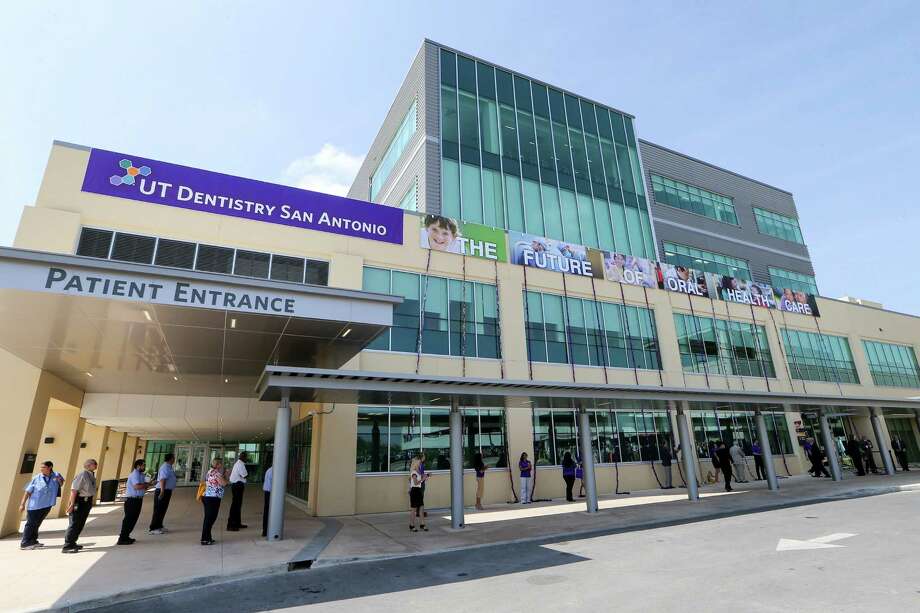
The $96.5 million Center for Oral Health Care & Research has energized faculty and students at the University of Texas Health Science Center’s School of Dentistry.

“I’ve been here a long time … And this building has generated a level of excitement within our School of Dentistry that I haven’t seen for a decade,” said the school’s dean, Dr. Bill Dodge.
Standing four stories tall and spanning 198,000 square feet, the dental school’s new facility will serve patients from across South Texas, university officials said. The structure houses the dental practices of the school’s faculty members. It also will be the place where the dental school’s students get their hands-on training once they’re ready to care for patients under faculty supervision.
Students and residents providing supervised care to patients do so at a reduced price, usually about one-third the amount of the fees charged by faculty.

Dental students will spend most of their time in the new building once they get midway through their second year of the four-year educational program, Dodge said.
The modern structure, at 8210 Floyd Curl Drive in the South Texas Medical Center, was formally dedicated Thursday. It includes a dental surgery operating room and an overnight recovery area that were built to hospital specifications, university officials said. The building’s four floors are equipped with more than 400 dental chairs. Each exam room and surgical area features extra-large monitors to allow up-close views of the care being provided.

The first two floors feature specialty care, including oral and maxillofacial surgery, geriatric dentistry, periodontics, prosthodontics and implants. The third and fourth floors feature general dentistry care.
“We have all specialties represented here,” Dodge said. Patients “referred for specialty treatment would not have to leave the building.”

The new building will improve education and provide better patient care, health science center President William Henrich said Thursday. It has been open to patients since July.
It became apparent the dental school needed a new home for its clinical practices because its original building, opened in the early 1970s, wasn’t equipped for technological advances in dental care, university officials said.

“Dentistry has changed — it’s become far more technologically centric,” Dodge said. “And we had great difficulties in trying to accommodate the new technology in our old facility.”
Upgrading the original facility and bringing it into compliance with new building codes would have driven up costs to almost the same price for new construction, Dodge said.
“We just needed a better environment for our patients, our students and our staff,” he said. “With diminishing state support and other support, we are more and more reliant on patient care revenues to maintain the quality of our programs.”

The older facility, located next to the health science center’s medical school and nursing school on the Long Campus, wasn’t as patient friendly, said Patrick Lew, a senior project manager for the UT System’s Office of Facilities, Planning and Construction.
“There were just large waiting areas for all the clinics,” Lew said of the dental school’s older building. “I think some of the clinics were even at capacity, and they had seating in the corridors for patients.” In the new space, each clinic has a separate waiting area.
State Sen. José Menéndez, D-San Antonio, said the center “represents the ability for people from all walks of life to have dental care.”

Menéndez noted that, as a young child, he received dental care at the original building after his mother, a nurse, moved to San Antonio and initially didn’t know where to take him for such services.
“That building, while it may have been old, was a place where people in San Antonio who would not know where to go, who to take their children to … they could go to be safe and get good dental care,” he said.

The new facility will allow the dental school to see increasing numbers of patients, Menéndez said.
“And I have to tell you, for me, that is the most important part,” he said.
Later this month, an open-air sky bridge will be installed to connect the building to the Medical Arts & Research Center next door, which houses the medical practices of the 700 physicians at UT Medicine San Antonio, the faculty practice of the health science center’s medical school. Those physicians care for more than 250,000 patients each year.
The sky bridge will provide more convenience — one-stop shopping of sorts — for patients seeking medical and dental care.

“We treat patients with many diagnoses that might affect or influence the way that we treat them,” Dodge said. “To be connected physically with our medical facility … we can refer patients for evaluation in any of the medical specialties and then have them come back to us.”
The dental school will continue using around 150,000 square feet of its original building on the Long Campus for offices, research space and student classrooms, Dodge said.
The dental school has a total enrollment of 600 to 620 students, including specialty trainees, residents and dental hygiene students, he said.

Source:  http://www.expressnews.com/business/health-care/article/UT-s-new-dental-center-to-care-for-more-patients-6497190.php

In other dental news: Aurident's 3D dental scanners offer superior quality for both model and impression scanning. The Optimet DS 6000 Scanner uses patented proprietary conoscopic holographic technology to generate highly accurate and consistent scans. The DSi 6000 Impression & Model Scanner overcomes the limitation of other scanners by accurately scanning impressions and models where other scanners have difficulty.

Brush DJ app helps improve your dental hygiene


An app that makes brushing teeth fun for youngsters improves dental hygiene of users, reports a new study. This free toothbrush timer app named “Brush DJ” plays music for two minutes – the optimum time for brushing teeth – taken from a playlist or randomly from the user’s own device or cloud.
As well as encouraging tooth brushing for two minutes, it also reminds users to spit out after brushing but not to rinse, sets reminders to brush twice a day, use a mouthwash at other non-brushing times of the day, sets alerts for dental appointments and reminders to change toothbrushes once every three months.

“The results of our study indicate that apps such as Brush DJ are beneficial to users and open the way for further research to extend their use and effectiveness,” said lead researcher Ben Underwood from Plymouth University Peninsula Schools of Medicine and Dentistry in England. The research showed that 70 percent of respondents reported their teeth felt cleaner since using the app and 88 percent said that Brush DJ had motivated them to brush their teeth for longer.

The research team concluded that not only had Brush DJ contributed to greater motivation for young people to care for their teeth more effectively, but it also has huge potential as a way to convey important oral health messages and information. Brush DJ was launched on the Apple App Store at the end of 2011. By February 2015, the app which is free with no advertisements or in-app purchases, had been downloaded on more than 197,000 devices in 188 countries. It can be used with any type of toothbrush.

The study appeared in the British Dental Journal.

Source:  http://www.bgr.in/news/brush-dj-app-helps-improve-your-dental-hygiene/

In other dental news: Aurident offers the Optimet DS 6000 Scanner which uses patented proprietary conoscopic holographic technology to generate highly accurate and consistent scans.

The DS 6000 Scanner can be used for all dental applications such as copings, full contour crowns, bridges up to 14 units, implants, implant bars and dentures.

Boiano Dental brings future practice to the Bronx


The newest innovation in dental technology will give everyone a reason to smile.
Boiano Dental located at 3651 E. Tremont Avenue is ushering in the future of dentistry by utilizing a highly accurate Computer-Aided Designed/Computer-Aided Manufacturing technology to create perfectly fitting dental caps made from sturdy materials such as lithium disilicate, zirconia and porcelain.

Dr. Giovanni Boiano, DDS, FAGD, FICOI, and George Santini, CDT dental technician with over 30 years experience work in conjunction to design these dental restorations which are considered to be a vast improvement over traditional dental restorations.
According to Dr. Boiano and Santini, CAD/CAM technology scans a patient’s mouth using a handheld CEREC Omnicam which takes a 3D image of a patient’s jaw and saves it as a personalized computer file.

“We use a high speed optical camera accurate to within five microns and we can provide a patient with this restoration in the same day they visit,” said Dr. Boiano.
“This is especially great for elderly patients who may have a difficult time coming in for appointments and cuts down on a number of visits they would have to make before for a fitting.”
Dr. Boiano explained that CEREC CAD/CAM technology allows dentists to provide their patients with inlays, onlays, crowns and veneers in only one appointment
The file is then sent to Santini’s computer located in the office’s basement and the technician proceeds to design the dental restoration from start to finish while making sure the restoration will fit the patient’s existing dental anatomy.

Santini and Dr. Boiano explained that adjustments to these restorations are made using the CEREC inLab program and are saved in real time.

Once a design is finalized, it is milled inside of their CEREC inLab MC XL milling unit which creates the restoration from a solid block of either lithium disilicate, zirconia or porcelain.
“A huge plus with this technology is that as opposed to the old restorations of porcelain fused metal, these restorations are completely metal free and are created using lithium disilicate, zirconia or porcelain,” said Santini. “These crowns we make using CAD/CAM are as strong as steel and they’re just as durable.”

This innovative program can allow dentists to create veneers, crowns and bridges simultaneously from these materials which are then taken by Santini to be polished and glossed by hand for five to eight minutes.
The restoration process can take anywhere from eight to 20 minutes depending on what type of dental restoration is be crafted.

A single tooth takes about eight minutes to be milled in the machine, while a bridge may take about 20 minutes, Dr. Boiano explained.
He added that his office is the one of the few in the borough to adopt this new technology due to its complexity and cost, explaining that less than 5% of dentists in the United States utilize CAD/CAM.
For more information and to schedule an appointmen, contact Boiano Dental at (718) 597-6500.

Source: https://www.blogger.com/blogger.g?blogID=9160926191374939275#editor/target=post;postID=7298749482894489266

In other dental news: Aurident's 3D dental scanners offer superior quality for both model and impression scanning. The Optimet DS 6000 Scanner uses patented proprietary conoscopic holographic technology to generate highly accurate and consistent scans. The DSi 6000 Impression & Model Scanner overcomes the limitation of other scanners by accurately scanning impressions and models where other scanners have difficulty.